Passive regeneration
Under suitable operating conditions, exhaust heat and the aftertreatment system allow soot to oxidize during normal driving.
Typical situation
Sustained operation with adequate exhaust temperature.
DPF diagnostics, cleaning, regeneration, and replacement in Richmond, VA. Get a clear next step for warning lights, repeated regens, and lost power.
A diesel particulate filter captures soot from the exhaust. As soot collects, the system uses heat to burn it off through regeneration.
Ash is different: it does not burn away during a regen. Accumulated ash requires an appropriate cleaning process, and a damaged filter may need replacement.
Repeated warnings deserve a diagnosis. A filter problem may also involve sensors, exhaust leaks, engine operation, or other aftertreatment components.
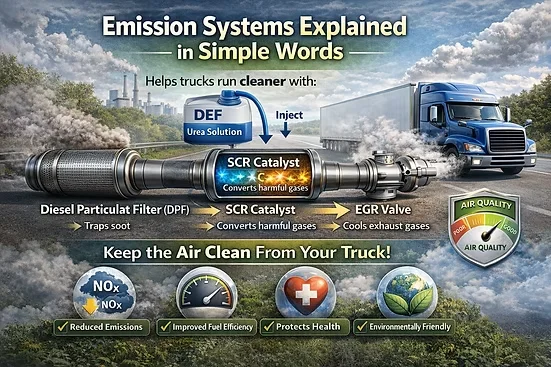
The right approach depends on soot loading, active faults, and the vehicle manufacturer’s service requirements.
Under suitable operating conditions, exhaust heat and the aftertreatment system allow soot to oxidize during normal driving.
Sustained operation with adequate exhaust temperature.
The vehicle’s controls increase exhaust temperature when conditions call for additional soot removal.
The system requests a regeneration cycle. Follow the vehicle’s operating instructions.
A parked regen may be operator initiated; a service regen uses diagnostic equipment when appropriate after evaluating the fault and filter condition.
Excessive loading or active faults may require repair or filter removal instead.
Regeneration creates very hot exhaust. Follow manufacturer instructions and keep the exhaust away from combustible materials.
Tell us what your truck is doing and bring any fault codes. Symptoms help guide the inspection; they do not identify the failed part by themselves.
Determine the loading condition and whether regeneration, off-vehicle cleaning, or replacement is appropriate.
Check the conditions and faults preventing the system from completing its cycle.
Evaluate differential pressure readings, temperature signals, wiring, and other relevant components.
Look for issues that can increase soot production or cause repeat aftertreatment complaints.
Repair the cause and assess system operation before deciding the next step.
Review symptoms and codes, check relevant data, and assess filter and component condition.
Discuss the recommended repair, regeneration, cleaning, or replacement based on the findings.
Evaluate system behavior after service and discuss maintenance or follow-up needs.
No. Regeneration addresses soot under suitable conditions. Ash, damaged filters, sensor faults, and other causes require a different repair.
Follow the vehicle’s operator manual and the instructions associated with the warning. If there is a stop-engine warning, overheating, or unsafe operation, stop safely and seek assistance.
Timing depends on diagnosis, filter condition, parts availability, and the work required. Call with your vehicle details to discuss scheduling.
Vehicle year, make, model, engine, fault codes, symptoms, and recent repairs. Mention whether the truck is at the shop or disabled roadside.
Diesel Tech Truck & Trailer Service
6030 New Osborne Tpke, Richmond, VA, USA